How to transition from Chatbot over Dashboard to an AI-Native Enterprise Architecture
A deep dive into the overarching architectural trends that separate successful AI deployments from brittle demos, including MCP Gateways, Memory Graphs, and Skills Repositories.
👋 Hello! I recently spent time digging through all my notes and architectural teardowns from the latest Google Cloud Summit in Sydney 2026 .
I went in looking for better ways to prompt autonomous agents, but I came out realizing I was focused on the completely wrong layer of the stack. Today’s post is a deep dive into the overarching architectural trends that separate successful AI deployments from brittle demos.
We’ll explore why prompt engineering is a dead end for scale, and how top engineering teams are rewiring their infrastructure to support true agentic workflows.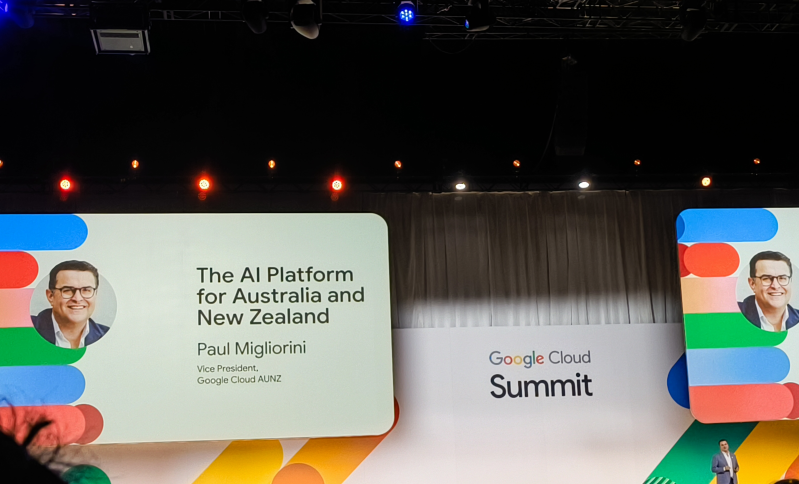
🔑 Key takeaways
- The prompt isn’t the product; the system is the product. The most successful organizations are stopping their obsession with prompt engineering and instead rebuilding their core infrastructure to support autonomous agents. A brilliant prompt cannot fix a fundamentally insecure or latency-heavy architecture.
- Centralize your security with an MCP Gateway. Don’t give agents direct API keys. Route all agent tool requests through a Model Context Protocol (MCP) Gateway to enforce zero-trust authentication, manage rate limits, and contain the blast radius of rogue agents.
- Static memory files don’t scale. Dropping 10,000 words of markdown into a context window is expensive, slow, and imprecise. The industry is moving to Memory Graphs that pull dynamic, token-by-token context based on semantic relevance and entity relationships.
- Scale capabilities through a Skills Repository. Stop hardcoding tools into individual agents. Build a centralized, version-controlled registry of peer-reviewed “skills” that agents can dynamically discover and load at runtime, effectively decoupling tool logic from agent logic.
- Embrace Eval-Driven Development. You cannot improve what you cannot measure. The teams winning the agent race are building robust evaluation pipelines that treat agents like deterministic code, testing them against thousands of edge cases before deployment.
The end of the “Chatbot over Dashboard” era
If you’ve built any sort of agentic workflow in the last two years, you know the feeling. You start with a single Python script that calls an LLM, give it a few tools (like a web scraper or a database reader), and it feels like magic. Then you add a second agent. Then you need them to talk to your internal billing database and your CRM.
Most companies try to adopt AI by adding a conversational layer to their existing SaaS tools. It’s the “Post-it note on a monitor” approach. It works for basic Q&A, but the moment you want an agent to actually do something complex asynchronously—like reconciling an invoice or pushing code—the traditional security models and static file-based contexts fall apart. Suddenly, you’re hardcoding API keys everywhere, context windows are overflowing with irrelevant markdown files, and your “smart” agent system is a brittle mess that breaks every time the model provider updates their weights.
The transition from a human navigating a graphical UI to an agent navigating internal APIs requires entirely new primitives. You have to stop treating AI as a feature, and start treating it as the core operating system of your business. Here is how the teams that are actually scaling this are doing it.
1. The MCP Gateway (The Choke Point)
If every agent connects directly to internal tools, your attack surface is massive. You cannot prompt-engineer your way out of a security breach. If an agent has a direct API key to your Stripe account, a clever prompt injection attack could drain your funds.
The emerging standard to solve this is the Model Context Protocol (MCP) Gateway. Instead of holding credentials directly, agents request actions through the Gateway, which acts as a centralized, zero-trust choke point for all agentic actions.
How it works in practice:
- Zero-Trust Authentication: When an agent decides it needs to query a database, it sends a payload to the Gateway. The Gateway authenticates the agent, checks if the agent is explicitly authorized to run that specific query for that specific user, and only then forwards the request.
- Blast Radius Containment: If an agent goes rogue, hallucinates a destructive command, or suffers a prompt injection attack, the Gateway limits what it can actually execute. You can set rules like, “Agents can only read data, never write,” or “Require human-in-the-loop approval for any purchase over $50.”
- Unified Logging and Auditing: Security and compliance teams can monitor agent behavior in real time from a single dashboard. Every tool call, every payload, and every response is logged immutably.
- Rate Limiting: Agents are fast. A poorly designed loop can spam your internal APIs with thousands of requests a second. The Gateway acts as a circuit breaker, pausing agents that exceed reasonable rate limits.
graph LR
    A[Orchestrator Agent] --> B[MCP Gateway]
    C[Coding Subagent] --> B
    B -->|Zero-Trust Auth & Rate Limits| D[Internal APIs]
    B -->|Audited Execution| E[External Databases]
    B -->|Blocked| F[Unauthorized Actions]
Note: Introducing a central gateway adds latency to every tool call, which can compound in tight reasoning loops. It also introduces a single point of failure—if the gateway goes down, all agents are effectively paralyzed. However, for an enterprise-grade secure architecture, this trade-off is non-negotiable.
2. Memory Graphs (The Librarian)
Historically, agents were given context by reading flat markdown files or static documents (e.g., massive system prompts or rudimentary RAG retrieval dumps). As tasks grow more complex, this approach scales terribly—you either hit the model’s context limits, drive up your API costs astronomically, or dilute the agent’s focus with irrelevant information, leading to hallucinations.
The industry is rapidly abandoning flat files and adopting Memory Graphs, where context is managed dynamically, token-by-token.
How it works in practice:
Instead of vectorizing entire documents, information is broken down into atomic entities and relationships (e.g., User -> created -> Project -> depends on -> Feature).
By treating memory as a graph, agents can traverse relationships intuitively. If an agent is asked to “fix the billing bug,” it doesn’t just scan a folder of code. It traverses the graph from the concept of “billing” to:
- Recent error logs associated with the billing service.
- The specific code files linked to those logs.
- The architectural decision records (ADRs) explaining why the code was written that way.
- The specific developer who last touched the module.
The Graph Engine synthesizes this traversal and injects only what is semantically relevant into the prompt. This dynamic retrieval uses far fewer tokens, executes faster, and provides a significantly higher signal-to-noise ratio than indiscriminately dumping file contents into the context window.
3. The Skills Repository (The Arsenal)
When you build your first agent, its tools are usually hardcoded directly into its system prompt. When an enterprise deploys thousands of agents across dozens of departments, hardcoded tools become a maintenance nightmare. If an API endpoint changes, you have to find and update every agent that uses it.
The solution is a Centralized Skills Repository—a version-controlled registry where human engineers publish modular, peer-reviewed “skills” (which include the LLM instructions, the API schema, and the access patterns).
How it works in practice:
This pattern decouples the agent’s reasoning engine from the tools it uses, allowing specialized teams to manage specific capabilities:
- The Database Team can publish a “SQL Query Skill” with built-in sanitization and read-only constraints.
- The HR Team can publish an “Employee Lookup Skill” that automatically redacts salary information based on the requesting user’s access level.
- The DevOps Team can publish a “Deploy Code Skill” that automatically runs tests before executing.
When a generalized orchestrator agent needs to perform a task, it queries the Skills Repository, dynamically discovers the official, vetted skill for the job, and loads it into its context. This ensures that every agent is always using the latest best practices and security constraints without ever needing to be re-prompted.
Lessons learned for teams making the transition
If you are currently rebuilding your architecture to support agentic workflows, keep these hard-won lessons in mind:
- Stop trying to prompt-engineer your way out of architectural problems. If you’re constantly writing things like “NEVER delete a production database” in your system prompts, you are setting yourself up for failure. LLMs are non-deterministic; they will eventually ignore the prompt. You should block destructive actions at the network or gateway level.
- Move to dynamic context early. You will spend too much time curating static memory files that your agents ignore anyway. Start building entity-relationship models and graph retrieval systems now, because they take time to tune.
- Build the kill-switch first. When agents can execute code and hit production APIs, you need a single, reliable, and instantaneous way to sever their access. The MCP Gateway provides the perfect insertion point for an emergency stop button.
- Governance friction is real. Centralized “Skills Repositories” mean that updating a tool can break hundreds of downstream agents simultaneously if you don’t have rigorous versioning. Treat agent skills exactly like you would treat public-facing production APIs. Use semantic versioning, and deprecate old skills gracefully.
- Evaluate obsessively. Transition to Eval-Driven Development. Build test suites that run your agents through hundreds of simulated scenarios every time you tweak their system prompts or update their skills. If you don’t have automated evals, you are flying blind.